
Arm pads are usually the lighter, less restrictive choice; arm guards typically add more coverage with a small mobility tradeoff. Product names and coverage vary, so compare the actual elbow, forearm and upper-arm panels, use the maker's size chart and confirm the equipment required for the player's game.
The choice is about the coverage a player wants and whether the pad stays put through a full range of movement. “Arm pad” and “arm guard” are product labels rather than a shared sizing system, so compare the shape of the exact model.
Start with the player’s rules
USA Lacrosse’s 2026 equipment guide lists lacrosse arm pads as required for boys’ field players and says the elbow should be properly and completely covered. Its girls’ field-player list does not include arm protection as required equipment. Rules can vary by game, age and league, so check the current list before buying.
Compare coverage and mobility
USA Lacrosse describes arm pads as typically lighter and less restrictive. Arm guards often offer more coverage with a small mobility tradeoff. That is a general buying distinction, not a measurement of every model. Makers use the names differently, and some products add hard elbow caps, extended forearm panels or upper-arm coverage.
| Choose a style | What to compare |
|---|---|
| Arm pad | Elbow coverage, forearm length, strap placement and whether the lower profile suits the player’s movement. |
| Arm guard | How far the padding extends above and below the elbow, bulk at the elbow crease, and whether the added coverage still allows stick control. |
Position can help frame the choice, but it is not a rule. Attack players who expect more checks may prefer more coverage; midfielders or defenders may prioritize a lighter feel. Treat those as player preferences and compare actual panels rather than assuming every attack player needs a guard or every midfielder needs a pad.
Check fit in motion
Use the exact manufacturer’s chart and try on more than one size if possible. USA Lacrosse’s youth gear-fitting advice suggests checking that the elbow bends without significant resistance and avoiding a size that slides or needs constant repositioning. Move through a ready stance, raise and lower the stick, and bend and straighten the elbow. The elbow cap should stay centered while the forearm and upper arm remain covered as intended.
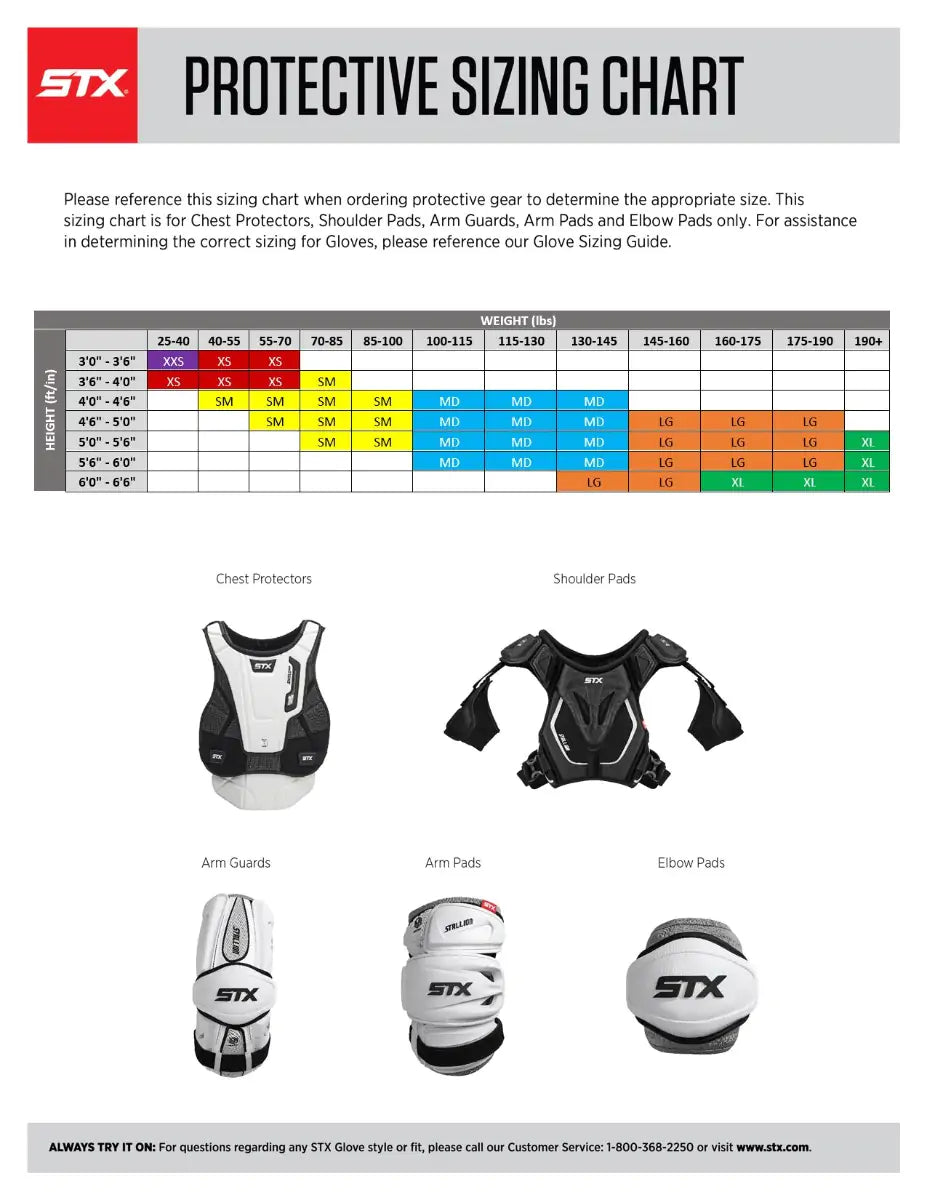
STX’s protective sizing chart uses height and weight ranges and covers arm guards, arm pads and elbow pads. Use the chart for the chosen maker and product; do not transfer a size from another brand. For ND200 shoulder-pad markings and fit, see the shoulder-pad guide. The broader gloves and pads by position guide covers the rest of the protective setup.
Sources
Checked November 5, 2026.
- USA Lacrosse 2026 Equipment Guide
- USA Lacrosse entry- to mid-level gear guide
- USA Lacrosse youth gear-fitting tips
- STX protective sizing chart
- STX Cell VI protective equipment
Related
Common questions
What is the difference between lacrosse arm pads and arm guards?
USA Lacrosse describes arm pads as typically lighter and less restrictive, while arm guards often provide more coverage at the cost of some mobility. Names and designs vary by maker, so compare the coverage on the exact model.
Do boys' lacrosse players need arm pads?
USA Lacrosse's 2026 equipment guide lists lacrosse arm pads as required for boys' field players and says the elbow should be properly and completely covered. Check the rules for the player's age group and competition.
How should arm protection fit?
The elbow section should sit over the elbow and remain in place as the player bends and extends the arm. Use the maker's chart and check that straps do not stop normal movement.